**Note: The product links in this article are Amazon Affiliate Links. No extra cost to you, but I get a kickback from any purchases. Let's call it a headhunter's fee...but less cool.**
So, I've said in the past in various interviews that I don't have a favorite author, per se. I find it nigh impossible to actually nail down one singular author I love the most. Rowling embedded herself in my soul, but Valente's words make my heart soar. Lem's wit and absurdity never lose their shine, but Jemisin's worldbuilding is to die for.
But I think, if you drove the tacks down under my thumbnails and said I had to give one name, I think that name would probably be Christopher Moore.
Those who know him are probably nodding to themselves knowingly. For those who don't...how to sum up Christopher Moore...hmm...
Take a Mel Brooks movie. No, not that one. Yeah, that one. Then cut out all the fluff. Keep the insane, WTF concepts, then add a Richard Pryor sense of humor with a Joan Rivers (RIP) dry delivery, and then sprinkle on the sort of heartbreaking poignancy present in a movie like RENT or The Green Mile.
Also some magic.
And if you can imagine that, then you've got a much better imagination than I do. Christopher Moore's work is hard to parse out in a short summary like that because there really isn't anything like what he does. You have to make a minimum of two or three comparisons to really try and capture it. From The Island of the Sequined Love Nun and The Lust Lizard of Melancholy Cove, with their over the top absurdity, to his vampire trilogy (You Suck, Bite Me, and Bloodsucking Fiends) rife with wit, to my personal favorites (And personally, I think Christopher Moore's favorites, too.), his research-heavy novels. I've written already on Sacre Bleu, his Impressionist era fantasy, but it also includes Fool and The Serpent of Venice, his riffs on Shakespearean classics (King Lear and The Merchant of Venice, respectively.).
But probably his most famous of the lot, maybe his most famous book of all, is Lamb: The Gospel According to Biff.
One side will say it's sacrilegious...and the other side will agree, we just don't care. Have you ever wondered what happened in the missing years of Christ's life? Well, Christopher Moore has the best answers for that.
(Umm...the spoilers are going to start here. So be aware of that shit.)
See, I'm not a Christian. We won't get into many specifics, but suffice it to say that view isn't changing any time soon...ever, really. I don't buy into the religion, and I also have never bought into the sort of heart-wrenching, hair-ripping zealotry to Jesus that I grew up around. I've read The Bible. I've read The Book of Mormon. I've read a lot about Christianity, along with a lot of other religions. I didn't understand why people would love Jesus so God damn much.
Lamb is the first and only book that has ever made me love the Christ child. It's the only one that made me care. And after my fourth or fifth re-read just recently, I've been picking apart why.
It's dead simple.
Moore's Joshua (Apparently that would have been his actual name? Maybe? I'm not sure, but let's go with that for now.) is the only time I found Jesus sympathetic. He was relatable. He was human, which is supposed to be the big draw, right? He's just one of us. He's, at his core, supposed to be a man. But the religious version of Jesus is so holy and shit that it just doesn't connect to me. Never has.
But in Lamb...the first time we see Joshua, he's reviving a dead lizard that his brother keeps killing. Just an endless cycle of resurrection. Because what the hell else would a little kid with godly power do? He falls in love with Mary Magdalene, but he knows he can't do anything. It's a little boy crush. His best friend is a crude, sinful son of a bitch. And Joshua is wracked with doubt: he's not ready to be the Messiah, his dad won't talk to him, and he's trying to figure out how to just cope with all of this.
For five sixths of Lamb, everything is spent building up Joshua and Biff as characters. They travel along the Silk Road to meet the three wise men. They learn ancient Chinese chemistry and acupuncture and medicine. They study in a Tibetan monastery and learn Kung-Fu and Buddhism. They study with a yogi in India.
And Biff has a lot of sex. Joshua doesn't.
So by the time we get back to preach the gospel, we've followed about 2 decades of Joshua's life, traveling the world. And because the story is told from the POV of his best friend, we see him in maybe the best light possible.
That makes the return to Israel brutal. Saving Mary Magdalene from a disastrous marriage. Gathering the Apostles. Preaching on the Holy Ghost...I mean, it's a Jesus story. It ends one way.
But when we get to the scourging, the sacrifice, the crown of thorns, the crucifixion, it's heartbreaking. Not in a "human condition" kind of way, but in a "this is Joshua, and he's refusing to speak in his own defense" way. And for such a funny book (The scene where Jesus has coffee for the first time is one of my favorite scenes in any book, ever.), the ending is...well, it's a freaking Jesus story. the ending is miserable.
And that is to its credit. In the midst of the laughing, the silliness, all of that...you forget that this is the story of Christ. Somehow, Moore manages to make the crucifixion a surprise gut punch at the end. And it's the longest gut punch ever. Up to the last moments, he's feeding you hope...but there is no hope.
So rather than the actual Biblical Jesus, a figurehead instead of a person, Lamb takes Joshua, puts him through hell, shows you his human side in the best and worst ways, puts his flaws on display...and then rips him away from you. And that is why Lamb is the only book that makes me give half a crap about Jesus. Ever.
Showing posts with label review. Show all posts
Monday, October 1, 2018
Monday, August 6, 2018
Book Review: The Fifth Season by N.K. Jemisin
Hi, I'm Voss and I am always behind the times when it comes
to media. Like, always. I only started watching Supernatural this year. I read
The Perks of Being a Wallflower about, oh, ten years after it first got onto my
radar. And let's not even talk about me and music. My most listened to station
on Pandora is 90's Country. If I want to push my boundaries, I hit up 2000's
Country.

I'm behind on media is the point. So of course I only just
got around to reading N.K. Jemisin's The
Fifth Season. Now, I was at the Worldcon where the whole Sad/Rabid puppies
bullshit went down (Or at least where it came to a head.), so Jemisin and her
work were on my radar already. But I just never picked it up. I was too busy
re-re-re-re-re-reading Harry Potter and The Cyberiad. Very important work.
Now, I'm picky. I'm a super
picky reader. I'm not the kind of reader who subscribe to the "I'll give
it a chapter" mentality of picking a book. I give books a page. I know
that I'm probably missing out on some good books by doing that…but honestly? I
don't want to read good books. I want to read amazing books. And while I can't
always quantify what it is about that first page that turns me away or keeps me
reading, but I've always just judged that quickly on whether a book is going to
hold me.
Also, I don't love high fantasy. I don't. I think when it's
done well, it can be incredibly strong, but I see a lot of the same issues
repeated in high fantasy/alternate world fantasy that I just can't get behind.
I'm tired of pseudo-medieval Anglo-Saxon settings. I'm tired of seeing the same
archetypes that you find in every beginning D and D session adventuring through
the world. I'm also super fucking tired
of this oddly jagged writing style you see in a scary amount of high fantasy.
It doesn’t flow. It's not natural. I'm super guilty of it, the few times I've
tried my hand at high fantasy, and it's honestly why I don't write it much. And
when I do, it's hard work.
All of that, every bit of that 350 word spiel, is building
to this point: I loved The Fifth Season.
I loved it so much. It surprised me, and you might put together that surprising
a writer with your writing is not an easy thing, most of the time. Authors are
rarely taken unawares by plot and story progression. More often than not, we
see exactly what you're doing, there. But Jemisin threw me, and not only that,
she threw me in ways that I knew, in retrospect, I should have put together.
At this point, we're going to be getting into spoiler territory
for The Fifth Season. Spoiler
warning, spoiler warning, spoiler warning. There, I gave you four of them.
Listen to whichever one you want, because I don't review without spoilers. Sorry.
The Fifth Season
immediately opens with something different, something steeped in voice. And I
can't stress the importance of voice in reading enough. "Let's start with
the end of the world, why don't we?" Immediately, I'm interested.
Immediately, you learn so god damn much. You get an idea of how this book is
going to read. You learn early on that time isn't exactly a meaningful concept
within these pages. It's certainly not a singular linear pathway. And you
understand from this line, and the rest of the prologue, that the world we're
stepping into isn't a super hospitable one. It's a dangerous place to exist.
And the writing on a mechanical level also lends to the
intentionally disjointed, unstable feeling of the world. The Stillness is,
ironically, not still at all. It's plagued by constant seismic activity that
has to be stilled by the inborn magic of orogeny in certain people. And the
writing switches back and forth—hold onto something, because the reaction to
this is never good—between close third person and second person POVs. And yeah,
if you'd suggested to me that a book like that could be good? I would have
rolled my eyes and humored you while walking away.
But it works. Damn it all, it works when it's done here. Essun is all told in second person. You
are Essun. You are learning about yourself. You are uncovering your own secrets
as you read. Damaya and Syenite are both close third person. You're seeing
their story unfold, and with the way this is written, it's perfect. It's beyond
perfect. It's the only way it could have made sense.
Okay, I did give spoiler warnings, but I am going to give you a fifth one, because
this is a big part of the book. This is the twist at the end. Are you warned?
Are you feeling prepared? Okay.
There are three characters…but there is also only one. Essun
talks throughout her chapters about changing who she is, becoming someone else.
She's clearly changed her identity before, and Essun isn't her original
identity. I kept wondering how Damaya, Syenite, and Essun would be brought together.
Then she revealed that Damaya chose the name Syenite when she became a proper
orogene.
I should have put the rest together at that point, but I
didn't. I assumed the book would end with Syenite and Essun meeting up. They didn't
have to, because after she stopped being Syenite, she started being Essun. It's
all one character. Essun is written in second person because it's direct. Those
other people with other stories? They are, for means of Essun's own survival,
other people. They are no, and cannot be, her. If they were her, then she would
be killed. Probably brutally killed. So she is no one but Essun. That's why
it's structured the way it is, and it's beautiful.
The Fifth Season
also shoots wide and away from my problems with high fantasy. This is not Anglo-Saxon.
It's set somewhere equatorial, with a mostly black cast of characters. It
instantly shifts the feeling of the book. The described beauty standards aren't
written through a European gaze. The senses of loyalty, cooperation, etc are
all shifted just slightly off from what's expected. It sounds like it shouldn't
make much of a difference, but it does. It makes a huge, sweeping difference,
and I honestly think that's part of what makes it feel like a new world. The
Stillness feels like it's different
than our world, and that immediately helps sell the fantasy for me. Just a tiny
shift away from what's expected, like the little slips of a fault line, changes
everything.
It doesn't stop with the worldbuilding though. I can
absolutely see why the Sad/Rabid Puppies hated this book. They're wrong, and they're
bigoted, but I see why it wouldn't appeal to them. Jemisin creates a world of casual
diversity. Female black MC. Most powerful character in the whole world? An
older black gay man. There's a casual mention of a transwoman, and also god
damn HRT in a fantasy world. The Fifth
Season is a place where diversity can live. And no, The Stillness is not a
place that encourages differences. They're not supposed to be. The government
in charge (The Fulcrum, the Sanzed, and Yumenes) hates difference, hates
change. But they're not the good guys.
So a chill black female main character, who ends up in a
three way relationship with a gay man and a bisexual man, and who travels with
a pseudo-adopted son and a transwoman from noble blood? Yeah, don’t' read this
if you're a bigot. You won't like it.
And with that segue, I would say there's one more group who
may want to avoid this, but not for shitty reason like the bigots. If you are
particularly affected by tragic, awful things happening to children…maybe not
the book for you. While it always makes sense in the world, the story, and with
the characters, it's a noticeable thing: children in this story do poorly. Their
hands are broken to teach them lessons. They're forced to live in barns.
They're kept in comatose states to serve the government. They're molested by
their social superiors. And they're sometimes just flat-out murdered in cold
blood. It works, it really does, but there's enough that even I think it's
worth warning off people who just can't handle that. Or even if you just can't
handle it right now, or without warning. You've been warned.
But all in all, The Fifth
Season is the first book to leave me in a proper book hangover for…a few
years, at least. I think the last one was How
to be a Normal Person, and that hangover only lasted a day or so.
I'm on day three of my Fifth
Season hangover as I write this, and I don't see it getting better anytime
soon. So clearly I'm giving this book 5 stars. Thank you for writing this, Ms.
Jemisin. Thank you.
Labels:
diversity
,
fitth season
,
high fantasy
,
jemisin
,
nora
,
review
Thursday, January 12, 2017
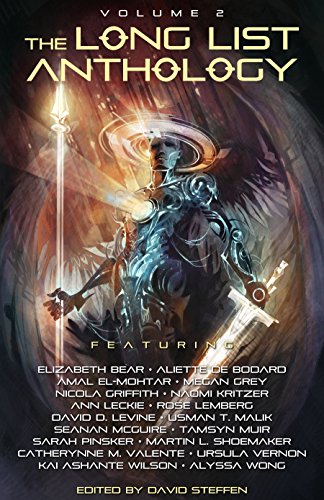
Review: The Long List Volume 2
So, if you've been hanging around for a bit, you might have
noticed the odd review float by, and you might have noticed that I settled on a
format: The Good, The Bad, and The Ugly. Highly original? Of course not, but it
works.
Then what's this? Well, it's a review of a book that really
doesn't work with that… in point of fact, it's not even a review of a whole
book. It's about half a book, since there's a fairly clear delineation between
the two halves. This is a review of The Long List Volume 2. Or the short stories
therein, at least.
What is The Long List? Well, to know that you have to know
The Hugo Awards. They're fan-voted awards in the SF/F community, and one of the
categories is for best short fiction of the year. There's only 1 winner and 5
semi-finalists, for lack of a better term, but there are a lot of other stories that get mentioned almost enough to make that "short list." That's The Long
List, and it's been compiled into an anthology by the wonderful David Steffen
over at Diabolical Plots, and made available for everyone's compact, easy
reading pleasure.
So why am I only doing half? Well, there are a lot of
shorts, but for stretch goals for the crowdfunding to make the book happen,
novellas were included. I'll be doing those as a separate post. Or possibly
more than one, depending how in-depth I go with each one. But that's enough of
this pointless chattering explanation: onto the fiction!
(Note: there are two non-fiction pieces in here as well. If
I cover them, they'll be on their own as well.)
Damage by David D.
Levine: This was a well-written piece, but not particularly mind-blowing. It's
a solid story with good writing, and it was an enjoyable read, but I do feel
like I've seen all the elements before, just not in precisely that
configuration.
Pockets Amal El-Mothar:
If you enjoy magical realism, this will be a real standout for you. I was
thrilled to see representation for a genre that seems to be largely pushed
aside. That said, the plot is the weak point. This story is all about concept
and execution, and in those places it succeeds.
Today I am Paul by
Martin L. Shoemaker: Holy shit, guys. This one. I had specific complaints
about the first two. They were good, but flawed. This story is… perfect. If
nothing else, try this one out of the anthology. And keep the tissues ready.
Tuesdays with Molakesh
the Destroyer by Megan Grey: Not only well written, but placed very well
after Today I am Paul to lighten
things up. It's got brash humor and adult language and it works beautifully:
what else would you expect from a rebellious teenager and a retired demon?
Wooden Feathers by
Ursula Vernon: Both beautiful and bittersweet, this story all by itself
convinced me to take a harder look at Ursula Vernon. Gorgeous imagery, surprising
plot twists, and subtle writing make this both brilliant fiction and a
wonderful statement about art and artists.
Three Cups of Grief,
by Starlight by Aliette de Bodard: This one is unique, and it revels in
that. With a distinctly non-Western vibe permeating everything, it's
intriguing, but perhaps not for everyone. Don’t look for a tight, gripping
plot. Don't look for a plot at all. At most, you'll find a shadow. But these
three short vignettes create something magical and haunting that's well worth
the read.
Madeleine by Amal
El-Mothar: This, for me, is one of the two weakest stories in the
collection. It's still very strongly written, has emotional impact, is
compelling enough to carry you through the story… but we really have seen this
exact thing quite a lot. Don't go into this one expecting really anything
original at all.
Pocosin by Ursula
Vernon: This is really, truly an atmospheric piece. A good high-middle
quality piece for this collection. It's all about the setting and the main character.
Nothing else really matters, and that's okay. That's exactly the way this story
should be. It's perfectly quirky and odd in all the right places.
Hungry Daughters of
Starving Mothers by Alyssa Wong: Wow. This one doesn't seem like much of
anything at first, and it unfolds a million delicate, beautiful petals. It's
very rich and sensory. If you like strong descriptions, you'll love this one,
no doubt.
So Much Cooking by
Naomi Kritzer: All right then. If I were to include an "Ugly"
section in this review, it would be occupied by this story. Yes, the writing is
cogent. I understand it. I obviously don't have a problem with epistolary
storytelling. I have four books that do it. But this… it was dull. It felt
dated by the threat of Bird Flu, as though this was written when that was a
headline, but then kept in a trunk for whatever reason. And possibly the thing
that hit it the hardest: it didn't feel like an SF/F story. The one speculative
element—a much stronger Bird Flu epidemic—felt unimportant. It could have been
any threat at all. But it also felt… mundane. It just missed all the marks for
me, unfortunately.
The Deepwater Bride by
Tamsyn Muir: All right, this one sort of straddles the line between short
story and novelette, so I'm tucking it in here. This one is delightful. I love
the eldritch horror/lovecraft thing, I love psychics, and I love the general
vibe this story provided. More than worth the read.
And there's that. I don't know when we'll finish off this
review, since I'm plugging away at my work, but here's hoping it won't be too long.
Now, if you'll excuse me, I'm going to go shovel myself a walking path.
Voss
Labels:
award
,
david steffen
,
hugo
,
long list
,
nomination
,
review
,
short
,
story
Saturday, April 16, 2016
Book Recommendation - Sacre Bleu by Christoper Moore
Now, if any of you are following me on Goodreads (What?You’re not? Well, go! I’ll wait here.), you may have noticed my love for
Christopher Moore. If you’ve never read his books, I highly recommend them. I
won’t lie and say that they’re, like, child appropriate… because they’re not.
But they’re funny as all hell. Irreverent, sometimes sacrilegious (Here’s
looking at you, Lamb.), and very well-written.
But today, I want to talk about another books entirely. The
black sheep of the Christopher Moore family of books.
Sacrè Bleu.
When this book came out, I was so fucking excited. Not only
was it Christopher Moore, it was Impressionist Era France. Monet, Morisot, Toulouse-Lautrec,
Cezanne, Pissarro, Manet. I was hooked before I even read a single word. And, although
we haven’t actually started the review yet, I’m going to spoil the ending – I
love it. It’s not my favorite Moore book, but it’s right up there (It would
take a lot to unseat Lamb from the top spot.).
Unfortunately, that’s not a popular opinion. Moore fans were
sort of unhappy with the book, in general. And admittedly, it’s aa departure
from his other books. It’s not just humor. It’s intellectualism. It’s
historical fantasy. But it apparently missed the mark for a lot of his
audience, which saddens me. This is a book I whip out for people to read all
the time. And since I just finished it again and it’s fresh in my mind… I
figured there wasn’t any better time to take a proper look at it. Maybe you’ll
decide that you love it, too.
The Good:
I can’t actually just say everything, as much as I’d like to. There’s a lot of
good in this book. It’s got Moore’s normal wit, it’s all about art and painting
and creating. That’s enough to sell me on it right there, but there’s also
romance. There’s debauchery. There’s historical aspects to it. And there’s
actual scans of famous Impressionist Era paintings. Not just the big ones,
either, which is a nice change of pace.
But more than that, even, the historical bits work into the
fantasy elements perfectly. It’s not easy to do even a few times, but he
manages to seamlessly fit some pretty powerful magic (Time travel, immortality,
that sort of thing) into the already strange world of art. Now, it’s more
complex than all this, but the basis of the magic is that ultramarine blue,
(The Sacrè Bleu of the title) can distort the flow of time. It’s used to
explain a lot of the oddities you see with artists, but my favorite is probably
with Claude Monet. When his first wife died, he painted her to capture the
color blue she was turning. Yeah. That part’s not fictional. You can see the
painting. Camille Monet on her deathbed.
But in the book, it’s a little less creepy, and more
desperate. He uses the blue. He tries to stop her from dying by painting, tries
to twist time with this magical blue paint so that she doesn’t have to die. And
both in real life and in the book, painting that tore him up.
It’s that kind of attention to detail, digging out those
things and putting them together, finding everything to do with blue in that
era and that location. The amount of work and devotion is staggering by itself,
but the fact that it works? That’s where the real magic comes from.
And, as much as I love ebooks, I have to say to get this one
in print. It’s a piece of art in itself. All the text is blue, which tickles
the shit out of me, and the pages are thick and ragged. To me, that heightens the
experience of reading the book.
The Bad:
There’s not much I can criticize in this book, but one thing does stand out, if
I’m being nitpicky. If you’re looking for a super-intense book, this isn’t the
one for you. It’s going to take its time, and there are going to be parts where
you could be okay putting it down. It’s not a thrilling ride. It’s a meander
through the Louvre, which is enjoyable in its own right.
The Ugly:
I had a really hard time coming up with anything
to put in the ugly category on this book. So this is a little bit of a stretch
to call it ugly. There’s a little bit of a disconnect between the first and
second halves. Really, it’s just about the marked difference between the plot
before and after the midpoint, but it can feel a little inconsistent. That’s
it. That’s all I’ve got. There’s literally nothing ugly in this entire book, in
spite of what some reviews might say. If you can find this book, grab it
quickly and love on it. It won’t do you wrong.
Voss
Sunday, April 6, 2014
Pendragon: Revisited
Greetings, greetings! (Also: spoilers contained within. You have been warned.)
So. the Pendragon books. The brainchild of D.J. MacHale. I started reading them when I was ten or eleven, and carried through until the very end. And then, after I graduated, I read them again. Admittedly, I found them somewhat lackluster, by comparison to the first read-through. But I expected that. After all, I know all of the plot twists.
But I got a hankering again, not too long ago, and I dove back in from the very beginning: The Merchant of Death.
Here's what I've found, rereading it the third time, and the first time with an authorial eye.
The plot in these books is excellent. I want to point that out. It's all very solid, even if it doesn't make any sense until the very end of the book. The influence of Saint Dane (the antagonist) is, for the most part, subtle. At least on the grand scale on which these battles are fought. A merchant on Denduron, selling the miners the weapons they need for revolt. A scientist on Cloral, not so innocently making a fertilizer that happens to make crops poisonous. A friendly lounge singer with some very shaky mob ties on First Earth.
However, where I find plot falling apart is in the grander scheme. Not that it's a weak plot, at all. It couldn't be a weak plot, otherwise it wouldn't have carried ten successful books. What I've found is that the tension breaks... awkwardly at the end. There's a black moment, where Bobby sees his home territory of Second Eath destroyed. 70,000 people are sent off to another dimension. Or maybe they were killed. Who can say. In his rage, Bobby kills the man responsible. And Saint Dane tells him that was the final test. And he failed.
Now, through these books, we've been asking the same question as Bobby. Why him? Why any of the people chosen for this insane job of Traveler (those people who fight Saint Dane)? How does any of this work. Well... here's where the plot falters, at least for me. The black moment is the end of book nine, Raven Rise. The answers to our series-long questions come within the first five chapters of book ten, The Soldiers of Halla. For me, as a reader, it feels like a climax. We know. We finally have answers. Which makes it hard to then keep reading. Sure, Saint Dane's not dead and Third Earth still has a chance for survival. But we've hit the climax for the series before the climax for the final book. At least, for me, it was the climax.
All that being said, once you get past that and into the actual plot of The Soldiers of Halla, it's a good plot, too. It's just... overshadowed by the revelation of what are easily the series' biggest secrets.
The characters are just as incredible as the plot would suggest. And, unlike in many books, Bobby, the main character, is actually likable. I find that, in most YA books I read, the main character is tolerable, most of the time, with flashes of likability. Harry Potter and Katniss Everdeen stand out as prime examples of this. But Bobby is just some scared kid, whipping through dimensions and watching people get murdered. Get poisoned. Fight to the death as entertainment. And you feel for him, because he's a good guy.
The other characters are just as wonderful, too, but, for the sake of being concise, I'll limit myself to just one more: Saint Dane. The shapeshifting, immortal, genocidal, demon traveler. So yeah, he's pretty good at being bad. But that, to me, is not why he succeeds. In fact, I can pinpoint why he succeeds. It's a precise and brilliant moment. He's talking with Bobby (Saint Dane is a very classic, rug-chewing villain in a a lot of ways. The man likes his speeches) and points out that they both tamper with the way things are on the territories. In fact, for a while, Saint Dane had me convinced that he was in the right. The travelers run around, trying to stop him, while at the same time imposing the morals and ideas from their home territories on these other people. Who knows what effect that could have. Saint Dane can see all time and space. He can pinpoint his changes and direct them. He can go at it with precision instead of the potential toxic leak of the travelers. In fact, we even find out, in book ten, that Saint Dane started out with the noblest of intentions.
Of course, they were skewed. And so was he. But he started with a good plan, and he's so damn charismatic even I believed in him for awhile.
All in all, I recommend these books, especially if you're a young adult or you enjoy young adult sci-fi/fantasy. There's some rough writing in the beginning, but he has all the kinks polished out soon enough.
Definitely still 4 stars, as a series.
Voss
So. the Pendragon books. The brainchild of D.J. MacHale. I started reading them when I was ten or eleven, and carried through until the very end. And then, after I graduated, I read them again. Admittedly, I found them somewhat lackluster, by comparison to the first read-through. But I expected that. After all, I know all of the plot twists.
But I got a hankering again, not too long ago, and I dove back in from the very beginning: The Merchant of Death.
Here's what I've found, rereading it the third time, and the first time with an authorial eye.
The plot in these books is excellent. I want to point that out. It's all very solid, even if it doesn't make any sense until the very end of the book. The influence of Saint Dane (the antagonist) is, for the most part, subtle. At least on the grand scale on which these battles are fought. A merchant on Denduron, selling the miners the weapons they need for revolt. A scientist on Cloral, not so innocently making a fertilizer that happens to make crops poisonous. A friendly lounge singer with some very shaky mob ties on First Earth.
However, where I find plot falling apart is in the grander scheme. Not that it's a weak plot, at all. It couldn't be a weak plot, otherwise it wouldn't have carried ten successful books. What I've found is that the tension breaks... awkwardly at the end. There's a black moment, where Bobby sees his home territory of Second Eath destroyed. 70,000 people are sent off to another dimension. Or maybe they were killed. Who can say. In his rage, Bobby kills the man responsible. And Saint Dane tells him that was the final test. And he failed.
Now, through these books, we've been asking the same question as Bobby. Why him? Why any of the people chosen for this insane job of Traveler (those people who fight Saint Dane)? How does any of this work. Well... here's where the plot falters, at least for me. The black moment is the end of book nine, Raven Rise. The answers to our series-long questions come within the first five chapters of book ten, The Soldiers of Halla. For me, as a reader, it feels like a climax. We know. We finally have answers. Which makes it hard to then keep reading. Sure, Saint Dane's not dead and Third Earth still has a chance for survival. But we've hit the climax for the series before the climax for the final book. At least, for me, it was the climax.
All that being said, once you get past that and into the actual plot of The Soldiers of Halla, it's a good plot, too. It's just... overshadowed by the revelation of what are easily the series' biggest secrets.
The characters are just as incredible as the plot would suggest. And, unlike in many books, Bobby, the main character, is actually likable. I find that, in most YA books I read, the main character is tolerable, most of the time, with flashes of likability. Harry Potter and Katniss Everdeen stand out as prime examples of this. But Bobby is just some scared kid, whipping through dimensions and watching people get murdered. Get poisoned. Fight to the death as entertainment. And you feel for him, because he's a good guy.
The other characters are just as wonderful, too, but, for the sake of being concise, I'll limit myself to just one more: Saint Dane. The shapeshifting, immortal, genocidal, demon traveler. So yeah, he's pretty good at being bad. But that, to me, is not why he succeeds. In fact, I can pinpoint why he succeeds. It's a precise and brilliant moment. He's talking with Bobby (Saint Dane is a very classic, rug-chewing villain in a a lot of ways. The man likes his speeches) and points out that they both tamper with the way things are on the territories. In fact, for a while, Saint Dane had me convinced that he was in the right. The travelers run around, trying to stop him, while at the same time imposing the morals and ideas from their home territories on these other people. Who knows what effect that could have. Saint Dane can see all time and space. He can pinpoint his changes and direct them. He can go at it with precision instead of the potential toxic leak of the travelers. In fact, we even find out, in book ten, that Saint Dane started out with the noblest of intentions.
Of course, they were skewed. And so was he. But he started with a good plan, and he's so damn charismatic even I believed in him for awhile.
All in all, I recommend these books, especially if you're a young adult or you enjoy young adult sci-fi/fantasy. There's some rough writing in the beginning, but he has all the kinks polished out soon enough.
Definitely still 4 stars, as a series.
Voss
Labels:
author
,
d
,
d.j. machale
,
j
,
machale
,
pendragon
,
read
,
reading
,
review
,
YA
,
young adult
Subscribe to:
Posts
(
Atom
)

